
Pool Shock Types
Pool shock comes in four forms: liquid chlorine, dichlor, cal-hypo and non-chlorine. The strongest shock, cal-hypo, is the one people usually pick for algae. Non-chlorine returns you to the water soonest, but algae are not killed by it on its own.
- Strongest
- Cal-hypo, around 65 to 75% available chlorine
- Quickest return to the water
- Non-chlorine shock, after 15 to 30 minutes
- Top pick for algae
- Cal-hypo, put in at night
- Salt water pools
- For weekly shocks, dichlor or non-chlorine
Not sure this is your water? Try a photo match.
Pool Shock Types Compared
These strengths and wait times are typical numbers from Swim University's shock guide. If your bag or jug label differs, follow the label.
| Type | Available chlorine | Has stabilizer | Add it | Swim again | Kills algae |
|---|---|---|---|---|---|
| Cal-hypo | 65 to 75% | No | At night | After 8 hours, then retest | Yes |
| Dichlor | 56 to 62% | Yes | Day or night | After 8 hours | Yes |
| Non-chlorine | 0% | No | Day or night | 15 to 30 minutes | Not alone |
| Liquid chlorine | 10 to 12.5% | No | At dusk or night | Follow the label | Yes |
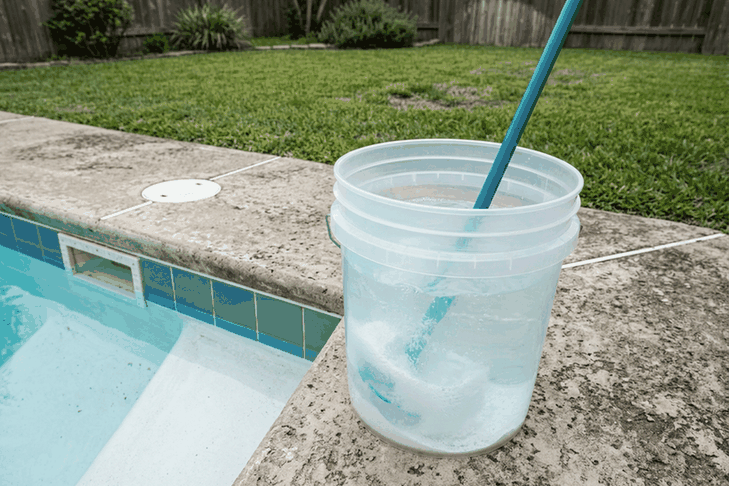
Cal-Hypo Shock for Pools
The strongest chlorine shock money can buy is cal-hypo, short for calcium hypochlorite, and it is the go-to for serious algae. Since it has no stabilizer, sunlight burns it off quickly, so add it at night.
It adds calcium and lifts pH as well. Pools smaller than 10,000 gallons, plus fiberglass and salt water pools, should not use it. A vinyl liner pool calls for dissolving the granules in a bucket first; that way none rest on the liner and bleach it.
One type of shock is cal-hypo; it is not a blanket term for every shock. In different ways, dichlor and non-chlorine products also shock a pool.
Non-Chlorine Shock for Pools
Potassium monopersulfate is the chemical in non-chlorine shock. No chlorine goes in with it. Instead, it oxidizes things the water carries, like sweat, oil and combined chlorine, which lets the chlorine already present do its job again. It works in any pool, day or night, and most swimmers can get back in 15 to 30 minutes after a dose.
An algae bloom will not clear with it, and excess amounts can drag pH and alkalinity down. It works for weekly upkeep and for breaking up combined chlorine; skip it if the pool is green.
Dichlor as a Shock
Because dichlor holds its own stabilizer, the sun does not burn it off, so daytime adding is fine. Slightly weaker than cal-hypo, it adds no calcium and works with salt water pools and delicate surfaces. Cyanuric acid (CYA, the stabilizer level) climbs with regular use, so skip it once your CYA is already high.
Liquid Chlorine as a Shock
Liquid chlorine is sodium hypochlorite, with a strength of 10 to 12.5%. No calcium or stabilizer is left behind, but its high pH means pool pH rises for a short time. Add it at dusk; it does not store well, and smaller pools are easiest to dose. Household bleach is that same chemical, just weaker. For more, see using bleach in a pool.
Best Pool Shock for Algae
Cal-hypo is the top choice for green water and algae, per Swim University's best pool shock picks, though one dose may not beat a bad bloom. For weekly upkeep in a salt water pool, it recommends non-chlorine or dichlor shock, saving cal-hypo only for algae.
How much you need depends on what color the water is. For the right dose, check how much shock a green pool needs or type your gallons into the pool shock calculator.
Liquid Chlorine vs Cal-Hypo Pool Shock
| Fact | Cal-hypo | Liquid chlorine |
|---|---|---|
| Form and strength | Powder or granules, 65 to 75% | Jug, 10 to 12.5% |
| Adds calcium | Yes | No |
| Effect on pH | Raises it | Raises it for a short time |
| Pool size | Can overdo a pool under 10,000 gallons | Dosing is simpler in pools under 10,000 gallons |
Sunlight weakens both products, so add either one after dark.
Are Pool Shock and Chlorine the Same Thing?
Not exactly. Speed sets them apart: shock drives chlorine up fast and fades in about 24 hours, while granules and tablets dissolve slowly to keep the level steady all week. Rely on tablets or granules for upkeep, and shock the water when it needs rescuing.
When Should You Put Shock in a Pool?
Put cal-hypo and liquid chlorine in at dusk or later, once the sun cannot burn the dose off, and run the pump overnight. During the day is fine for non-chlorine shock and dichlor.
How Often Should You Shock Your Pool?
Salt water pools also need a shock every week or two, and extra doses after heavy rain or heavy use. If the water has turned green, one larger dose is needed at once, and the color tells you the size.
Get the plan for your pool size
Pick the photo that matches your water, then enter your pool size: the troubleshooter works out the liquid chlorine in gallons plus the shock in pounds.