
Troubleshooter › Other colors
Brown Pool Water
When pool water turns brown, iron is the usual culprit. Iron oxidizes when it meets chlorine or air, going from a metal you can't see into rust you can. This often shows up just after a shock, and it's common in pools filled from a well. The answer is to deal with the metal first and hold off on the shock.
- Right after shock
- Usually iron
- Fix for metal
- Sequestrant, and no more shock
- Metal clears in
- Often several days
- Brown with slime
- Algae and dirt
Not sure this is your water? Match your water by photo.
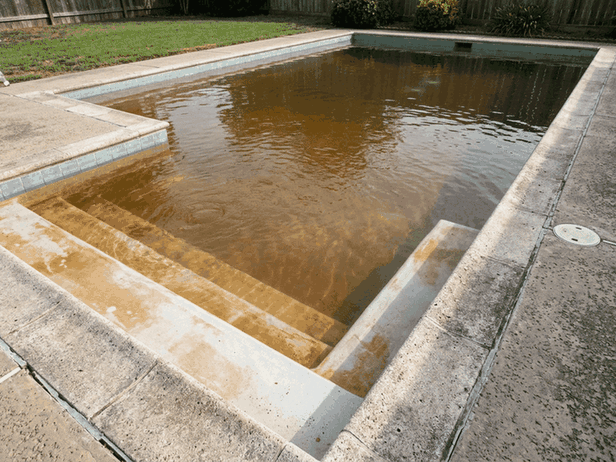
What Makes Pool Water Turn Brown?
Most brown pool water points to iron, and well water is the biggest source of pool metals. Iron, and sometimes copper, can also come from your fill water, aging plumbing, well setups, or certain pool chemicals.
While iron stays dissolved, it is invisible and nearly impossible to catch with a filter. The water may seem totally fine until something triggers the iron and it becomes visible.
Oxidized iron can make the water look anywhere from iced-tea brown to a thick burnt orange, and it's the same problem either way.
If you test for iron, anything over 0.3 ppm (parts per million) counts as high.
If there are stains as well, check whether they come from metal or organic matter before choosing a treatment.
Brown Pool Water After Shock
The brown tint does not come from the chlorine itself. The iron was already there, dissolved and invisible. Chlorine turns it into rust, so the whole pool changes color at once. Both chlorine and aeration trigger this.
More shock will not fix the color. Shock cannot remove metals, and it may leave stains on the pool instead. That is why shocking should wait until the metals are under control.
How to Clear Up Brown Pool Water
A pool treatment called a metal sequestrant is the go-to fix for metal problems.
- Skip the shock for now, but keep your everyday chlorine going, as the CDC recommends.
- Dose the sequestrant at the full amount the label gives for your pool size. Under-dosing is the top reason this treatment fails.
- Keep the pump going for 24 to 48 hours after you add it.
- Give it 3 to 4 days before you shock again.
- When the time comes to shock again, hold your pH between 7.2 and 7.8.
For ongoing metal treatment, add a maintenance dose of sequestrant every 1 to 2 weeks, following the product label.
Catching the Rust With a Filter
You can also clear the water by taking the rust out instead of keeping it dissolved. An iron filter can be fitted to the return, which is the jet that pushes filtered water back into the pool. After that, the pump runs as normal while the pool clears.
Vacuuming by itself tends to fail. If your filter cannot trap iron, vacuumed rust simply returns to the pool.
Some pool owners also fill the skimmer with polyester pillow stuffing while keeping the basket in to trap rust as water flows through.
Stains Left Behind
Untreated metal can lead to stained surfaces, damaged finishes, and long-term cosmetic problems. Dealing with the metal early protects the walls and floor of your pool.
Questions People Ask
Is brown pool water safe to swim in?
Water stained by iron is harmless, though brown and cloudy water can conceal what lies at the bottom. CDC rules for public pools say you must be able to see the pool floor through the water. If the main drain can't be spotted from the edge, the pool stays closed.
Can brown pool water clear overnight?
Not really, but rust can settle to the bottom, making the water above look clearer without removing the iron. In bad cases, vacuum the sediment or stir it back up so an iron filter can catch it.
Get the plan for your pool size
Tap the photo that matches your water and type your pool size: the troubleshooter works out the shock in pounds and the liquid chlorine in gallons.