
Troubleshooter › Cloudy water
Why Is My Pool Cloudy?
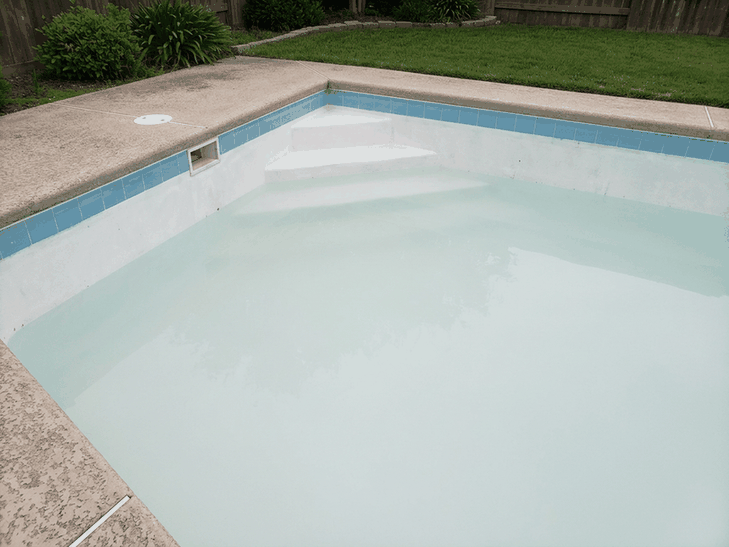
A pool turns cloudy for a handful of reasons: a tired filter, not enough chlorine, pH or alkalinity that has crept up, too much calcium, or algae just getting started.
- Most likely cause
- The filter not keeping up
- First thing to test
- Free chlorine, then pH
- Usually clears in
- 24 to 48 hours once fixed
- Can you swim?
- Not until you can see the bottom at the deepest point. Then test: free chlorine 1 to 4 ppm (2 or more with stabilizer) and pH 7.2 to 7.8.
Work out the dose for your pool
Which Cause Is It?
Match your water to a cause, and start with its quick check.
| Cause | What you see | Quick check | What to do first |
|---|---|---|---|
| The filter | Cloudiness even though tests look fine | The pressure gauge shows 8 to 10 PSI more than it did just after cleaning, or the pump gets fewer than 8 hours of running each day | Wash out the filter, then let the pump run more hours |
| Low chlorine | Dull, flat-looking water after a storm, a heat wave or lots of swimmers | Free chlorine below 1 ppm (below 2 ppm with stabilizer) | Hazy and below 1 ppm: shock, using the dose table. Slightly low only: pour in some liquid chlorine |
| High pH or alkalinity | Milky water and chlorine that runs out fast | pH above 7.8, or alkalinity above 120 ppm | Add acid to bring both down |
| High calcium | Milky water plus a white crust along the tiles at the surface | Calcium hardness above 400 ppm | Drain some water and refill, or bring pH and alkalinity down |
| Early algae | A slight green tint | Free chlorine low with a greenish haze | Scrub first, then shock |
How Much Shock to Use?
| Water | Pounds of 65% cal-hypo (10,000 gal) | Gallons of 12.5% liquid chlorine (10,000 gal) |
|---|---|---|
| Cloudy water, free chlorine under 1 ppm | 1 lb | About 0.6 gal |
| A pale green or blue-green shade | 2 lb | 1.3 gal |
| Darker shade of green | 3 lb | 1.9 gal |
| Very dark green | 4 lb | 2.5 gal |
The common powder sold as pool shock is cal-hypo, short for calcium hypochlorite, at 65% strength. Liquid chlorine is a strong pool bleach that comes in jugs, at 12.5%.
These amounts are for a 10,000-gallon pool. The pool-size box above the table will figure the right amounts for your own water.
Pick one column or the other, not both together. The CDC, the US health agency, cautions that mixing pool chemicals, or handling them without protection, can hurt people. Because cal-hypo raises calcium, liquid chlorine is the better pick when calcium hardness already tests above 400 ppm.
What Makes Pool Water Cloudy?
Cloudy water is full of tiny bits floating in it that the filter has not caught yet. Before buying anything, test so you know where they came from, because the fix follows the source.
Test kits use a few terms you should know. Free chlorine is chlorine that is still available to kill germs. Strips give the result in ppm, short for parts per million.
pH shows whether the water leans acidic or basic, basic meaning the opposite of acidic. Keep pool water in the 7.2 to 7.8 range. Total alkalinity is what keeps pH from swinging up and down.
Calcium hardness means the calcium dissolved in the water. Stabilizer, or cyanuric acid, protects chlorine from sunlight. A shock is one big dose of chlorine that knocks out algae and haze.
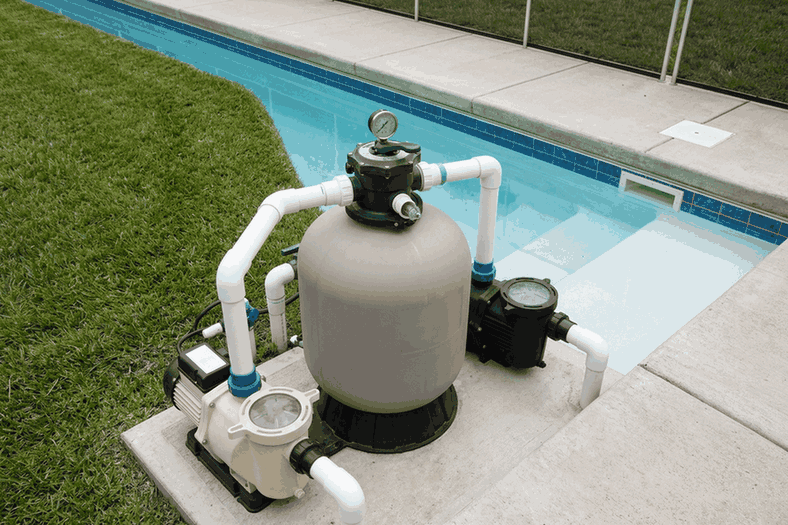
On top of the filter there is a round pressure gauge. It shows pressure in PSI (pounds per square inch).
A Plan That Clears the Water, Step by Step
- Start by testing free chlorine, pH, alkalinity, calcium and stabilizer so the treatment fits the real problem.
- If the gauge reads high, clean the filter, because a clogged filter cannot do its job.
- Get pH in range before adding chlorine, since above pH 8.0, chlorine loses much of its power.
- Brush the walls and floor so loose particles head toward the filter.
- Shock, or dose with a little liquid chlorine, based on your test and the water color.
- Keep the pump going, since it pushes the water through the filter, for 24 hours or more without stopping.
- Test free chlorine in the evening and again the next morning. If the morning reading is down by 1 ppm or less and the pool looks clear, you can stop. If it fell further, something is still eating chlorine, so dose again and retest the following night.
A test right after a shock often comes in lower than you expect, since algae and dirt consume the chlorine all at once. Most strips max out around 10 ppm. For an algae treatment, a drop kit that reads high chlorine gives a more honest number. With that kind of kit, you drip drops into a small sample of water until the color changes, then count them.
The Filter
Clean the filter when the gauge shows a reading 8 to 10 PSI above the clean level. During swim season, keep the pump going 8 to 12 hours daily.
A cartridge filter is a pleated tube you lift out and rinse with a hose. Sand and DE filters clean by backwashing, which is reversing the flow so the dirt flushes out. DE filters use diatomaceous earth, a fine powder spread over the grids, which are the cloth panels inside.
Filter sand gives up after roughly 5 to 7 years and then cleans poorly. A dusty white cloud hanging in the water can point to a torn DE grid.
Low Chlorine
What you do depends on the look of the water.
- Hazy water, free chlorine below 1 ppm: use the shock amount from the table.
- Clear water with free chlorine a little low: add a little liquid chlorine, then test again.
- Green water usually means algae, so use the shock amount in the table. But water that turned clear green right after shocking usually contains metal, not algae, and more shock makes it darker.
When there is too little free chlorine, bacteria can grow and make the water cloudy. Chlorine gets used up by sunlight, sweat, dirt, and pee and poop from swimmers, along with lots of swimming, fallen leaves and other debris. Check free chlorine and pH several times each week, plus after heavy swims or storms, so a slip gets caught early.
High pH or Alkalinity
Acid brings pH down. Muriatic acid is the liquid acid pools use, and dry acid is a granular form that is gentler to handle.
When pH is high you get cloudy water, weak chlorine and scale, scale being a hard white crust that forms on tiles. When total alkalinity tests over 120 ppm, pH keeps going back up and is hard to lower, so bring the alkalinity down first.
Does Low pH Cloud the Pool?
Cloudiness rarely traces back to low pH. The bigger risk is damage to your pipes, especially when pH drops below 7.0.
High Calcium
Test the incoming water first, then drain off some pool water and refill with softer water. Keep calcium hardness between 200 and 400 ppm.
Too much calcium can make the water cloudy. Keeping pH and alkalinity at the low end of their ranges helps stop that. If you cannot drain, bringing pH and alkalinity down with acid is the alternative.
Early Algae
Scrub all the surfaces, then shock using the dose the table gives for that color. Green water is usually algae, so shock it. However, water that goes clear green right after a shock likely holds metal, not algae, and more shock will deepen the color.
The metal is copper or iron carried along in the water; shocking makes it show up as clear green or brown. Our shock guide here covers metals in depth. As the filter removes dead algae, you may need to backwash a few times over the next day or two.
Clarifier Versus Flocculant
A clarifier, sold as a liquid, is meant for light haze. It gathers the fine particles into clumps so the running filter can grab them, typically within 1 to 2 days.
A flocculant handles a thick cloud. It pulls the cloud down to the bottom overnight. After that, switch the filter valve to "waste" and vacuum up the layer, so the dirty water exits the pool rather than passing through the filter. For help choosing, see our clarifier and flocculant guide.
Where the Numbers Come From
The shock doses follow our own shock guide and the Illinois Department of Public Health. Swim levels come from the CDC.
Questions People Ask About Cloudy Pools
Why did shocking make my pool cloudy?
The algae the shock killed becomes fine dead debris the filter still needs to remove. Cal-hypo also brings calcium, which can cloud water that already carried a lot of it.
Should you swim while the pool is cloudy?
No. Stay out of the water while it is cloudy, and wait until you can clearly see the main drain, the grate at the deepest point, from the side. If your pool has no drain, look for the deepest part of the floor instead. Wait for free chlorine between 1 and 4 ppm, or at least 2 ppm if you use stabilizer, with pH between 7.2 and 7.8. The public pool code says a public pool cannot open while the main drain is hidden from view at the edge.
Not quite your water?
Tap the photo that matches your water for the likely cause and the plan that goes with it.