
Troubleshooter › Other colors
Foamy Pool Water
Foamy pool water nearly always means the water is carrying too much organic material. That means all the bits that gather in the water over time: body oils, sweat, skin and bits of plants. You will see it as a thin white or off-white film sitting on top of the water, often pushed into a corner, and Lo-Chlor names this build-up as the number one cause. Regular treatment with a pool enzyme product or replacing some old water with fresh water can help.
- Usual causes
- Algaecide, lotions, organic build-up
- First fix
- Shock and run the filter
- Usually gone in
- A day or two
- Can you swim?
- Wait 8 hours after a shock, then retest
Not sure this is your water? Match your water by photo.
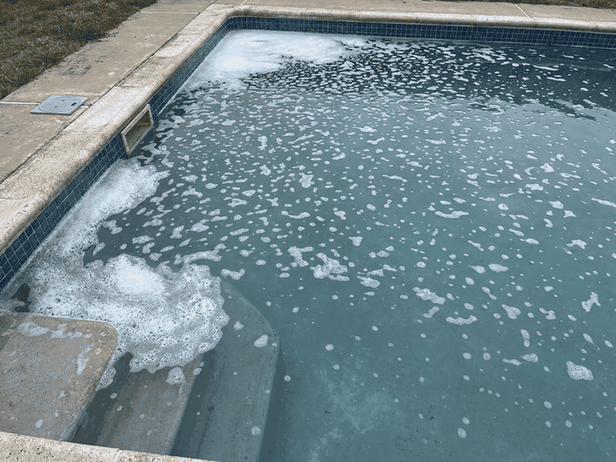
Why Does Pool Water Foam?
Foam shows up when there are too many oils and bits of debris in the water for the filter and chlorine to cope with. Swimmers bring skin, hair and sweat every time they get in, and whatever they have put on their bodies comes in with them. Sunscreen, moisturizer and hair products all wash off into the pool.
The garden adds its share too: leaves, insects, fronds and spores all find their way into the water and rot down into the same sort of organic material.
The build-up is worst in three cases: a pool with lots of swimmers, water left unchanged for years on end, and a filter whose run time is too short to stay on top of things.
Left alone, the build-up causes real trouble. The water goes cloudy, the pool starts using far more chlorine, the chemistry gets harder to hold steady, and a scum ring creeps along the waterline. That is why you should treat what is causing the foam.
Making the Foam Go Away for Good
The strongest cure short of emptying the pool is a pool enzyme product. Use it regularly, advises Lo-Chlor, and expect to see a difference within a couple of weeks. It is a patient fix, not a one-day one.
Replacing some old water with fresh water can also improve the problem, especially if the water has not been changed for years.
While you wait, keep the filter running.
Pool Foam After Shock
Foam can appear during a shock treatment. Shocking means pushing the chlorine up very high to kill algae, and dying algae sometimes leaves a white foamy film on the surface. This foam should fade by itself once the algae is finished off.
The key is to stick with it: killing algae is a process, not a one-off. Raise the chlorine to shock level and hold it there until every last bit of algae is dead, with the pump running day and night and the pool brushed and vacuumed each day until the water clears.
Don't add any other chemicals while you're shocking. For a hazy pool with chlorine on the low side, the suggested dose is 1 lb of cal-hypo for every 10,000 gallons; light green or teal water calls for 2 lb per 10,000 gallons. While chlorinating, hold the pH in the 7.2 to 7.8 range, per Illinois public health guidance.
Why Are Cloudiness and Foam Showing Up Together?
Usually the two have the same cause. Untreated organic build-up makes the water hazy, and the same build-up is what makes it foam. Cloudiness can also mean algae is taking hold, and foam often appears while the algae is being killed.
The next step depends on the cause: regular enzyme treatment can help with organic build-up, while algae treatment means raising chlorine to shock level and keeping it there until the algae is dead. During an algae shock, run the pump without stopping and brush and vacuum daily. With just a slight haze and low chlorine, begin at 1 lb of shock for every 10,000 gallons.
When the water runs clear again, an enzyme treatment or a partial water change can help keep the foam from returning. The CDC Model Aquatic Health Code says public pools must stay clear enough to see the bottom and the main drain, and that works as a rule of thumb at home too. If you cannot see the drain, keep treating and keep everyone out until you can.
Pool Water With an Oily Film
Suntan oils, moisturizers and hair treatments contribute to the organic build-up that causes foam and can leave scum along the waterline.
The real answer is a regular enzyme product. Changing out part of the water helps as well.
Foamy Pool Water: Questions People Ask
Is a foamy pool safe to swim in?
A big load of organic material uses up chlorine, so test first. The CDC says pools need at least 1 ppm of free chlorine, which is the chlorine left over and still ready to kill germs. If yours is lower or the pool is still being shocked, stay out, because a clear view of the bottom alone does not show the pool is ready for swimming.
Where should I start with a foamy pool?
Check the chlorine and the pH before anything else, since a heavy organic load eats chlorine and you want to know where you stand. Then run the filter and start an enzyme treatment or a partial water change.
Not quite your water?
Tap the photo that matches your water for the likely cause and the plan that goes with it.