
Troubleshooter › Green water
Green Pool After Shock
When a pool stays green after shocking, the usual reasons are a dose that was too small for the algae load, chlorine lost to the sun, or something in the water blocking the chlorine from doing its job. If the water looks green but you can see through it, metals are probably to blame, and extra shock can make things worse.
- Usual reason
- Not enough chlorine for the algae
- Next step
- Repeat the dose each evening
- Clear green after shock
- Metals: stop shocking
- Can you swim?
- Not until you can see the main drain. That is the grate at the deepest point, and free chlorine should read 1 to 4 ppm (parts per million).
Not sure this is your water? Match your water by photo.
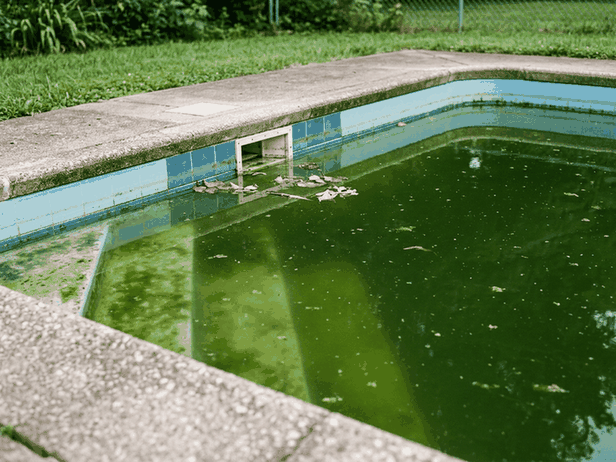
Why It Stayed Green
A small maintenance dose of shock will not clear a full algae bloom. For green water, plan on two to four times the usual amount. Shocking in daylight also works less well, since the sun burns away much of the chlorine.
Algae sometimes survives a shock, and pH that is off can be the reason. Chlorine loses strength when pH runs high, and a low pH also keeps the shock from doing what it should. Poor circulation or filtration can also leave the water green, even after shocking.
Is Too Much Stabilizer the Problem?
Stabilizer, known as cyanuric acid, builds up over time if you rely on stabilized chlorine and stabilized shock. Once there is too much, chlorine struggles to kill germs, bacteria and algae. If a test shows stabilizer above 90 ppm, drain off part of the pool and refill that portion.
How Much Shock Should You Use?
For calcium hypochlorite shock, commonly called cal-hypo, use 1 lb per 10,000 gallons for a routine dose or cloudy water, 2 lb for pale green or teal, 3 lb for deep green, and 4 lb for black-green water or black algae (Swim University).
Check the weight on the bag, then buy enough to cover each 10,000 gallons of your pool. The troubleshooter on our home page can work out the amount for your pool's size. You can swap in liquid chlorine of 12.5% strength instead: roughly 0.6 gallon, or 80 fl oz, matches 1 lb of shock. With a 10% jug, use about a quarter more. Treat algae with chlorine shock even if you usually go with a non-chlorine product.
How to Shock Again
- Test the water, then set pH somewhere in the 7.2 to 7.8 range so the chlorine works properly.
- Brush the walls and floor to loosen algae and let the chlorine reach it.
- In the evening, put in the full amount that matches your water shade, when the sun cannot burn it away.
- Keep the filter going; with algae, expect anywhere from a day up to a week.
- Let the shock work for 12 to 24 hours, then test again. A second shock is common, particularly when the water was very murky.
- Once the water is balanced, backwash or clean the filter.
Still Green After Algaecide
Copper-based algaecide can put copper into the water when it is used incorrectly. Copper turns water green or blue-green, and shock makes metals drop out of solution and stain the pool. If the green showed up after algaecide and then shock, suspect copper rather than living algae. If the water is murky or slimy, stay out of the pool, allow 12 to 24 hours for the shock to work, then check pH and chlorine, since a second treatment may be needed.
Brown or Blue-Green Water After Shocking
Brown or tea-colored water after shocking points to iron, while clear water with a green or blue-green tint points to copper. The standard color guide says green or blue-green points to copper, while brown or tea-colored water points to iron. Shock pulls these metals out of the water, so more shock may leave stains on the surface.
After adding a sequestrant, wait 3 to 4 days before the next shock.
Questions People Ask
Can you swim in a green pool once it has been shocked?
Keep everyone out while the water looks murky or feels slimy. Nobody should get in until pH and chlorine both read where they should. The CDC advises at least 1 ppm of free chlorine, meaning chlorine still free to clean the water. Public pools may not open if the main drain cannot be seen from the side.
What if the pool is green but chlorine reads high?
A high stabilizer level can leave chlorine far weaker than the number suggests. A pH outside 7.2 to 7.8 behaves the same way. Testing both shows which one is holding the chlorine back.
Why does green water turn cloudy after shocking?
Cloudiness after shocking is a sign the algae has died. Vacuum the pool and keep the filter going. You can also add a clarifier.
Not quite your water?
Tap the photo that matches your water for the likely cause and the plan that goes with it.