
Troubleshooter › Cloudy water
Cloudy Pool Water After Shock
Pool water often turns cloudy right after a shock. Most of the time the haze fades in 1 to 2 hours once the pump has moved the water around, though granular shock can take about 24 hours to dissolve fully. If a full day passes and the water is still hazy, something else is keeping the cloud around, and the usual culprits are an off-balance pH, a struggling filter, or dead algae the filter has yet to catch.
- Likely cause
- Fine debris and calcium left by the shock
- Normal haze lasts
- Often an hour or two; past 24 hours, look for a cause
- Still cloudy at 48 hours?
- Check pH and the filter, then clarifier
- Can you swim?
- Wait 8 hours after a cal-hypo shock, then retest
Not sure this is your water? Match your water by photo.
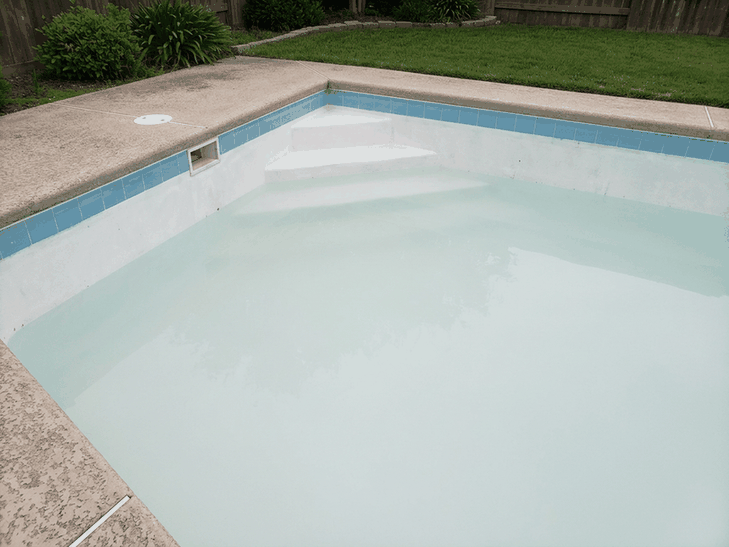
Milky Water in the First Hours After a Shock
Cloudiness after shock often clears within 1 to 2 hours, but that does not mean the pool is ready for swimming: wait at least 8 hours after calcium hypochlorite shock, and stay out if the main drain is hard to see. Granular shock is usually calcium hypochlorite, a chlorine powder that brings calcium along with it, and the grains need close to a full day to finish dissolving.
The calcium becomes an issue if your water was already hard. Calcium hardness simply means how much calcium is dissolved in the pool, and the range you want is 200 to 400 ppm. Above that range, the water can go cloudy unless low pH or alkalinity is enough to make up for it.
Keep the pump running while the haze clears, so the water keeps carrying the floating bits to the filter where they can be caught. Run the pump at least 8 hours a day until the water is clear.
Why Can Shocking Leave the Water Cloudy?
The cloud is often just what the chlorine left behind. Dead algae and small bits of debris keep drifting through the water until the filter collects them, so a pool that looked green or flat before treatment can seem worse before it gets better.
High pH is the next usual suspect. Once pH rises past 7.8, haze gets a real foothold, and high pH also weakens chlorine, so the shock does less than it should. Aim to keep pH between 7.2 and 7.8.
Your filter may be the hidden reason. Worn-out sand or an aging cartridge can let fine particles slip right past it, and a filter that was dirty before the treatment fills up quickly with dead algae.
Stabilizer matters as well. Cyanuric acid, the chemical most people call stabilizer, shields chlorine from sunlight, and the level you want sits at 25 to 50 ppm. Leave stabilized chlorine products out of any heavy chlorine job like shocking.
Clearing Water That Stays Cloudy After a Shock
A pool still hazy a full day after treatment needs a look, not another dose. Layering more chemicals on top rarely helps; you are better off letting the chlorine drop on its own and keeping the water moving steadily.
- Start with a water test. Before adding more shock, test free chlorine, combined chlorine, pH, cyanuric acid (stabilizer) and calcium hardness, since the results can help narrow down the cause.
- If the pH is high, lower it to somewhere between 7.2 and 7.8.
- Give the pump a minimum of 8 hours daily so the filter gets enough passes to grab what is floating.
- Give the walls, steps and corners a good scrubbing, since the water in those spots barely moves. Brushing those dead zones improves cloudiness within hours.
- Clean the filter earlier than usual, and swap in new sand or a new cartridge if the old one is worn.
Chlorine that drops to almost nothing within a day or two of shocking calls for a double or triple dose. For a hazy pool running low on chlorine, the usual dose is 1 lb of cal-hypo shock per 10,000 gallons, or about 0.6 gallon of 12.5% liquid chlorine. The troubleshooter on our home page works out the amount for your own pool size.
Using Clarifier or Floc on the Last Haze
When the test numbers look right and the filter is fresh, you can nudge a thin leftover haze along. A clarifier is a liquid that bundles tiny particles into clumps the filter can grab; a small dose followed by vacuuming works for a light haze, and the full effect can take a couple of days (source).
Floc, the common name for flocculant, is the stronger option, and it drops the cloud to the bottom. The settling often happens overnight (source), and you then vacuum the settled layer out on the waste setting so it exits the pool instead of going through the filter. Skip floc if you have a cartridge filter.
When Should the Pool Clear After a Shock?
It depends on what made the water cloudy and what you have done about it.
| Situation | Time to expect |
|---|---|
| Haze from the shock alone | 1 to 2 hours |
| Granular product fully dissolved | Roughly 24 hours |
| Brushing dead spots | Clearer within hours |
| Clarifier, full effect | Two days or so |
| Floc settling ahead of vacuuming | Often overnight |
A pool that goes past 24 hours with no improvement is not just being slow; it points to an underlying problem.
Common Questions
Is a Cloudy Pool Safe for Swimming Right After a Shock?
Two checks answer that. After a calcium hypochlorite shock, give the water at least 8 hours before letting anyone back in, and hold off until the main drain is easy to spot from the side. Public pools are held to the same standard: under the CDC Model Aquatic Health Code, a pool may not open if the main drain cannot be seen from poolside.
Will Shocking Again Clear the Cloud Faster?
It helps only when testing shows the chlorine has fallen to almost nothing within a day or two, a sign that the first dose was spent. When free chlorine is still holding steady, another round just adds more chemicals while leaving the pH or filter problem underneath untouched.
Get the plan for your pool size
Tap the photo that matches your water and type your pool size: the troubleshooter works out the shock in pounds and the liquid chlorine in gallons.